Showing posts with label books. Show all posts

Thursday, April 07, 2011

Top Five Book Series - #1

#1 - Discworld Series by Terry Pratchett

My love of fantasy rekindled after reading the Dragons of Autumn Twilight, I began looking around for what else was out there and stumbled across The Colour of Magic. This 'comedy' seemed to be the latest thing in fantasy so I bought it, read it, chuckled at the jokes (especially when the camera imp ran out of pink paint) and then bought The Light Fantastic, the next in the series, to read the rest of this two part story. I also lent the books to a couple of my friends who also enjoyed it, which helped to build my interest in these books.

However, to be honest, the first two Discworld novels are probably the worst of the series. Since then they have steadily improved and the recent novels are far different beasts to those earlier works. Now the books skip along, telling exciting stories but still with Pratchett's wit and thinly-veiled comments on modern society.

It has become something of a ritual where, every Christmas, I will gratefully receive a new Terry Pratchett novel from my in-laws. I think I have all his Discworld books and love them all to bits. They are the books that I do not hesitate to buy - or request as a present - and the books I'm most likely to reread. As such, they are probably my favourite series of books (at least at the moment!).

Wednesday, April 06, 2011

Top Five Book Series - #2

#2 - Dragonlance Series by Margaret Weis and Tracy Hickman

Whilst at high school I wasn't particularly interested in reading. The books we had to read for English Literature class were boring (To Kill a Mockingbird, Of Mice and Men, etc) and the school library's collection was lacking. Then, when I was around 15 years old or so, whilst in the local computer game shop I spotted a book that caught my eye. The shop had a small corner devoted to RPGs and board games and the book I saw was the Dragons of Autumn Twilight by Weis and Hickman. I'd seen ads for this in magazines saying it was a fantasy book based on AD&D gaming sessions (which turned out to be something of an urban myth). It sounded interesting - and the wonderful cover art by Larry Elmore didn't hurt either - so I bought it.

And my love of fantasy books and reading in general was shocked back into life.

Sure, I'd read the Hobbit, Lord of the Rings and perhaps one or two other fantasy books before then, but I never really found them that interesting. LotR has always been a tough read for me. Conversely, Dragons of Autumn Twilight was wonderfully fresh and easy to read. It's full of adventure, magic, combat, dragons (etc) and reads like a dramatised account of an actual gaming campaign (even if it wasn't). It was like a breath of fresh air amongst the stuffy, cloying atmosphere of the other novels I was reading.

Since then I've read the Chronicles, Legends, War of Souls, and Lost Chronicles trilogies (ah, fantasy novels and their trilogies!). I've read some of the short story collections and other bits and pieces. But, it should be stressed, only the stuff by Weis and Hickman; the other Dragonlance authors never seemed to do much for me.

I've also read some of the others non-DL works by Weis and Hickman like the Deaths Gate Cycle, Rose of the Prophet, and Darksword series but they were never quite as good as Dragonlance. Tanis, Sturm, Caramon, Flint, Tasslehoff, Goldmoon, Riverwind, Raistlin and the rest will always be my favourite group of typical fantasy characters - and it's amazing how they got us to 'care' for an evil character like Raistlin!

Tuesday, April 05, 2011

Top Five Book Series - #3

#3 - Wild Cards by George R. R. Martin et al

Superhero novels not based on existing comicbook properties (owned by companies such as Marvel and DC) are unfortunately quite rare. And, actually, the Wild Card mosaic novels - collections of short stories by a group of authors set in a shared world and interleaved together - aren't really superhero novels. Although they feature a version of our world which includes superpowered people, these "aces" as they are called are not generally heroes and don't wear brightly-coloured spandex costumes.

Inspired by a Superworld RPG campaign, the stories are generally grim and gritty, and reflect a certain degree of realism in dealing with superpowered aces and hideous jokers afflicted by the DNA-altering "Wild Card" virus. In certain ways, the stories are quite adult, involving a degree of sex and violence that was something of an eye-opener (especially for a series of superhero novels) when I first read them towards the end of the 1980s.

I can't seem to remember right now how I came to buy the UK version of Wild Cards, the first book in the series, with its wonderful cover by Brian Bolland. This book is perhaps not the strongest as it covers about 40 years of altered American history, jumping from one event, and one set of characters to another slightly haphazardly. Still, it sets up a fantastic background and a number of interesting, varied characters for the next umpteen books.

The series has undergone a few changes and is still being produced; the next book Fort Freak is due out later this year. Many of the books between the first 6 and the last 3 are very difficult to get hold of and I don't actually have many of them. Tracking these down at a decent price is something I still occasionally pursue.

Monday, April 04, 2011

Top Five Book Series - #4

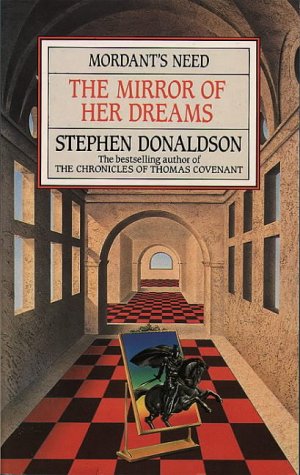
4. Mordant's Need series by Stephen Donaldson

By now it should be obvious that I'm a big user of my local library. One of the many books I once borrowed was The Mirror of Her Dreams by Stephen Donaldson (his best known fantasy series being the Thomas Covenant books). It was one of the few books where, once I'd read it, I had to read the second - and final part - of the series straight away. The library didn't have the second book yet and the paperback wouldn't be out for months, so I bought the hardback version of A Man Rides Through. Of course, that meant for a while I only had the second half to the series on my bookshelf (I eventually bought The Mirror of Her Dreams - probably the only time I've bought a book I've already read).

Of course, consisting of only two books this isn't really much of a 'series'. But I wanted to include it anyway because of its fantastic characterisation and its marvellous fantasy thriller-like story. I also love the unique "imagery" magic system used within the book. You see, on the world of Mordant magic is all done with mirrors - literally. Mages have to construct large, warped mirrors which then act as magic doorways allowing them to conjure items, elements or monsters from other realms or transport objects or people to these other places. It's a fascinatingly limiting method of conjuration put to great use in summoning monsters, fiery lava and unusual champions - such as Teresa, the passive protagonist of the book.

I remember really getting caught up in the story - a lighter, easier-to-read offering than Donaldson's other books (I found his Thomas Covenant books a bit dark and difficult to get into) - wishing that Teresa would stop falling for the manipulative Master Eremis' charms and become the hero she was meant to be. It was a thoroughly gripping read and one I still fondly remember.

Sunday, April 03, 2011

Top Five Book Series - #5

I thought I'd do a new, occasional feature here at PRN looking at my top five things in certain categories that just come to mind. For the first list, I'm going to look at my favourite series of novels (single books would make it too difficult to limit to just 5, or even 15). I should point out that the order is somewhat fluid depending on my feelings at the time.

Anyway, let's start with...

5. Felix Castor series by Mike Carey

I almost went with Jim Butcher's Harry Dresden books as my fifth choice. Both those and Mike Carey's Felix Castor books are similar, in that they both concern investigators of the supernatural, are written in the first person and feel like pulpy detective novels. And, of course, both are highly entertaining and most definitely recommended.

However, the first Felix Castor novel - The Devil You Know - was my introduction into the modern urban fantasy genre of books, is set in England (specifically London) and is by a writer of X-Men comics. Hence, it makes the list ahead of the Dresden Files! Admittedly, I only read Carey's book first because Storm Front (the first Dresden book) wasn't available at the library but hey, it's my list.

In a way, these books blend bits of the horror genre - ghosts, zombies, werewolves and demons feature - with a little bit of magic regarding exorcists abilities to control and banish these creatures and sets them in the modern day world. What I like about the Felix Castor books is that the existence of the supernatural are known by everyone. They're not common, and most people tend to want to ignore the existence of ghosts and the like, but they're not hidden, secretive phenomena known only to a very small number of people. There's even mention of the government bringing about laws concerning the returned souls.

Overall, the Felix Castor books are a fantastic read, as I stated in my review of the first book. They certainly rank up there at the top of the urban fantasy books.

Friday, April 01, 2011

The Writer's Tale: The Final Chapter

Although I already have the hardback version of The Writer's Tale, this paperback version - which I happened to stumble across whilst at my local library - isn't just a straight reprint. This edition is broken into two halves; the first half is a copy of the hardback version (minus the reprinted scripts which are now online) whereas the second half contains all new material from Russell T Davies' last days on New Who. There's over 300 pages of new stuff included - so, in a way, it's like two books in one, one old and one new.

The new material mostly covers the last year of David Tennant's (and RTD's) tenure on the show during a sort of "quiet" period, when only four specials - The Next Doctor, Planet of the Dead, Waters of Mars, End of Time - were produced. Well, and Torchwood: Children of Earth and various Sarah Jane Adventures episodes, of course! It's done in the same style as the first book, with emails between Russell and Benjamin Cook discussing the shows, although this time there's perhaps slightly more emphasis on Russell himself and less on writing Dr Who in general.

Because this essentially consists of emails, it often feels like reading someone's blog or a forum inhabited only by two posters. Being someone who reads blogs and forums daily, this means it's quite a easy and entralling read. Of course, it's also fascinating to discover the behind-the-scenes process that goes into putting out Doctor Who.

So, as with the hardback version, this is highly recommended if you're a fan of New Who or want to know the creative process behind writing for a successful TV show.

Now, if only Steven Moffat would write a similar book...

Saturday, March 12, 2011

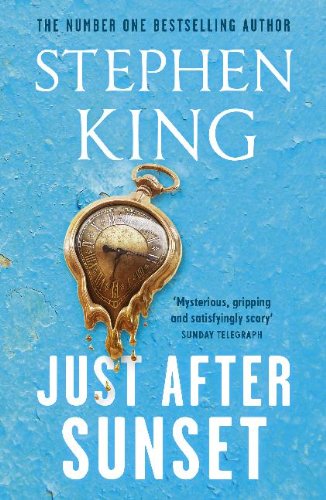
Just After Sunset (by Stephen King)

Second only to the various fantasy tropes (high, low, urban, modern, etc), the horror genre has featured highly in the many books I've read. A lot of the stories have leant more towards human, psychological or non-supernatural horror rather than classic monster tales containing rivers of blood and gore. Some of them would be classed more as thrillers, especially some of the later books by Dean Koontz, though I've also read one or two darker, gruesome supernatural stories by the likes of Clive Barker and James Herbert.

Stephen King is the favoured writer of many of the horror books I've read - though that may be because he's written so damned many of 'em!

Of his books, I tend to prefer his collections of short stories which tend to leave out some of the superfluous padding. Just After Sunset is one such collection. It contains 13 of King's short stories, many of which have been previously published in various magazines, and they're a mixed bunch. The quality does vary and none really stand out. It's probably one of his weaker efforts, though still darkly entertaining.

Stories such as N. (a paranoid Lovecraftian tale of OCD) and A Very Tight Place (a stomach-churning account of a man stuck in a Portaloo) stand out as a couple of the better ones, whereas The Cat from Hell is just plain silly.

One of the slight niggles with nearly all of these short stories - as well as many of his novel-length books - is that they feature American towns and places known to King. Thus, they all tend to take place in Maine or (as seems to be case with his later books) southern Florida. You can just tell that King and family head down to the Sunshine State when things get cold in the winter months up in Maine. It's this, and other, rampant Americanism in King's books that makes it a little difficult for a Brit like myself to really feel a kinship with his stories.

Just After Sunset
is a quick and entertaining read (one might say 'a real page turner') but not as good as some of his other shorter story collections, like Everything's Eventual and Four Past Midnight. Good enough if you like King, but not a must read.

Saturday, February 26, 2011

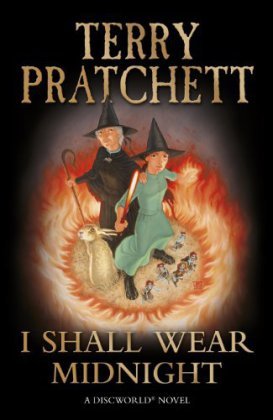
I Shall Wear Midnight (by Terry Pratchett)

Like a pair of comfy old slippers, reading Terry Pratchett's latest Discworld book - I Shall Wear Midnight - is a familiar, pleasant experience for me that is enjoyable and welcome. Although set on the Discworld, like Nation it is one of Terry's "young adult" books and therefore slightly separate from the main Discworld series. Again, the only real differences between this and his more 'adult' books are that the protagonist is a girl (well, now a young woman), it has a linear narrative which almost exclusively follows this single protagonist, and it has chapters. It really is just a standard Pratchett book that's trying to muscle in on the lucrative Harry Potter market.

The book follows on from Wintersmith and Hat Full of Sky with Tiffany Aching settled into her role as the fully-fledged witch of the Chalk (a remote-ish part of the Discworld countryside not far from the mountains). Together with her 'friends', the Nac Mac Feegles - little blue gnomes or pixies with more than a hint of rough gaelic about them - she helps out the people of the Chalk in her own wise witchery sort of way.

However, trouble is brewing. Her defeat of the Wintersmith with a kiss have released the Cunning Man, an evil vengeful spirit - well, more of a rumour really - that leads folk to hate and distrust pointy-hatted witches. Or any old woman who happens to spend far too much time on her own and has her own broomstick - like the older witch in black Tiffany keeps catching glimpses of and seems to be watching her. The Cunning Man, a frightening phantom with holes for eyes, is coming for Tiffany and as he gets closer he causes more and more unrest.

Meanwhile, there's a hare who keeps leaping through fire and disappearing. Is it some sort of omen?

I suspect this is the last Tiffany Aching book - not that it'll stop the character appearing in other books of course - as here Tiffany's role in the countryside is firmly established and her future (or at least potential future) assured. She finds a sort of love, not with the old Baron's son who takes over running the place when his father dies, but with perhaps an unlikely, intriguing, and somewhat inept guard. And, of course, she eventually does wear midnight - but only when she's 'old'.

One of the highlights in the story is when Tiffany, the latest witch to be helped by Granny Weatherwax meets up with first 'witch' to be trained by aforementioned Mistress Weatherwax. Eskarina "Esk" Smith hasn't been seen since waaay back in the third Discworld book (Equal Rites) over 20 years ago and it's great to see that this character hasn't been forgotten - or, at least, has finally been remembered in time for an encore.

Overall, this was a relatively quick, easy and fun book full of Pratchett's intelligent but gentle humour and packed with interesting ideas. His main characters tend to be a little too wise and clever and thus, in this book, you never really get the sense that Tiffany is truly threatened. Otherwise, a refreshingly entrancing read that was difficult to put down.

Saturday, January 08, 2011

Fighting Fantasy Gamebooks

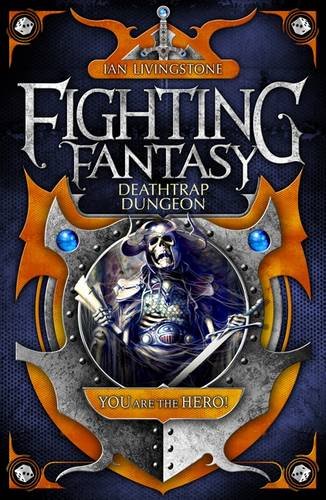
Searching around Apple's App store on my iPod Touch recently, I came across a few apps for the Fighting Fantasy series of books. After much "umm"ing and "ahh"ing over which book to choose, I decided against the first in the series - Warlock of Firetop Mountain - and went with Deathtrap Dungeon instead.

The Fighting Fantasy books were a series of "choose you own adventure" type books with some added dice-rolling to resolve combat against monsters. They first appeared in the early 1980s and were interactive books and games all in one. They were some of the first proper 'novels' (if you consider these books as such) I read after The Hobbit and the first half of Lord of the Rings (it wasn't until I was in my late 20s that I read the whole lot). They were also my introduction to roleplaying games. I fondly remember collecting a whole stack of them - together with my best friend I think we had all of the first 20 or so and I read most of these (often more than once). I think I also had the Sorcery! books, one or two of the Lone Wolf books as well as a few other similar books that were published at around the same time.

Now, I have to admit that I did used to cheat whilst playing/reading these books. I'd keep my finger on the previous page in case the new page I turned to resulted in the death of my character. That way I could "rewind time" and choose the less-deadly path. I think I also cheated sometimes with some of the dice rolls.

These new Fighting Fantasy apps are great. They reproduce the whole thing on the iPod, together with the occasional pieces of (coloured) artwork that were in the original books. Rolling of the two dice is done for you with a shake of the device which produces some accompanying 3-D animation, and you can access your character sheet (and each stamina-reviving food) whenever you want. As with many ebooks, the text can be resized and changed to a variety of different fonts. The app also automatically bookmarks where you last were. It feels just like reading the real thing.

Unfortunately though, it doesn't let you cheat. If you take a wrong turn or make a bad choice and your character dies, you have to restart from the beginning. Which, of course, means rereading all the pages you've been through before (unless you choose an alternate route) after rerolling up another character.

Deathtrap Dungeon was probably the third FF book I bought when I was a young teenager and, I believe, one of the hardest/deadliest of the series at the time. Certainly, in this electronic iteration, I found my character dying quite a few times. This was not helped by being specifically told that you character will need several items in the dungeon to get through. Therefore there is a tendency to try every door and pick up every object you come across. After my character had died half a dozen times, I started to get somewhat cheesed off having to skip through all the numbered paragraphs to get to the same point again to try a different course of action (damned stupid Buddha-like idol).

Otherwise, it's great fun and very well put together. Although I'm suspect it's only of interest to those over 30 who remember the original books. Still, if you want to try something similar online, the Project Aon website hosts most of the Lone Wolf gamebooks, which are free to play.

Tuesday, December 07, 2010

Blood Rites (by Jim Butcher)

Although this is the first of Jim Butcher's Harry Dresden novels I've reviewed on here, it is actually the 6th in the series. This will therefore be a general overview of the series rather than concentrate on this particular book. Anything written here applies equally to all the rest.

Like Mike Carey's Felix Castor books, the Harry Dresden books are an urban fantasy detective thriller series of novels with plenty of pulpy action. And like the Felix Castor books they are awesome. However, whereas Mike Carey's books limit themselves to undead phenomena - ghosts, zombies, werewolves, demons - all of which are linked to the spirits of deceased people, the Harry Dresden books include all things mythical, magical and supernatural.

For instance, in Blood Rites Harry is employed by an adult film director to protect the women of his cast from an entropy curse (thankfully, the book does not stoop to describing the inner workings, as it were, of adult movie production in fine and pornographic detail. Or any detail really). In the meantime, Thomas Raith - a White Court vampire - crops up and reveals a connection with Harry that significantly changes the wizard-for-hire's view of his life. Pretty much anything fantastical can crop up in these books - magical curses, werewolf packs, mischievous fairies, evil elven courts, three types of vampire, a mysterious guild of sorcerers, and so on. He also has an interesting take on vampires, introducing 3 different types - White, Red and Black - with increasing 'monstrous-ness' instead of just the usual single type.

As well as interesting twists on the usual magical menagerie, these books are full of action. Even during the quiet, character-building scenes you're not far away from the next clash against sorcerous shenanigans. This usually culminates in a battle of wits against the big boss villain near the end of the book. In this case, Harry goes up against Lord Raith, who is immune to magic and also once 'knew' Harry's mother.

The Dresden Files series of books are one of my all-time favourites and this is no exception. Sure, the books are about as subtle as a brick and are hardly going to win prizes for high art but they are a heck of a lot of fun. If you're a fan of modern day fantasy or of supernatural fantastical thrillers or just pulp detective stories with a twist, then I recommend you go out and get the first book, Storm Front.

Friday, October 22, 2010

Busted Flush (edited by George R.R. Martin)

I loved the first series of Wild Cards books, a series of anthology/mosaic books edited by George R.R. Martin and published in the late 80s and early 90s. Being a big fan of superheroes, the idea of dark tales about people who gain powers (Aces), or bizarre disfigurements (Jokers), due to an alien virus released in Earth's atmosphere sounded brilliant. And generally it was. The Wild Card series is probably in my top five series of books, together with the Discworld, Dragonlance, Dresden Files (hmm, series starting with 'D' seem a favourite) books.

However, this new series - and especially Busted Flush, the second in the trilogy - seems to have lost some of the magic. The Wild Cards series was always an attempt at doing superheroes realistically. Often that meant sacrificing brightly-coloured, exciting action and replacing it with personal conflicts peppered with sex and violence. Which is fine if you have intriguing characters. And that's the problem here. Most of the main characters are just not that interesting once you get past the initial introduction. There are some exceptions - Cameo springs to mind and even Hoodoo Mama - but these tends to be relegated to the background. Even Billy Ray (aka Carnifex), now a SCARE agent, is more intriguing that some of the main characters.

Story-wise, it's an odd modern day tale of superheroes getting involved in political conflicts. The first book in this new series - Inside Straight - introduced this next generation of aces as contestants on the reality TV show American Heroes (a superpowered version of American Idol). This was interesting and a reflection of the modern day's fixation on these overhyped talent shows. At the end of the last book, some of those superpowered contestants were formed into a UN superteam with the (frankly boring) name of the Committee. This second book sees this Committee in action.

To be honest, I got lost and my interest waned somewhere in the middle of the book. Part of the team went to Africa to help fight against - or was it for? (and that's part of the confusing bit) - the newly formed PPA (People's Paradise of Africa) as well as assisting in New Orleans to stop the Katrina-like hurricane-inflicted destruction. Some interesting tit-bits are introduced - the Radical reappears fighting for the PPA and the cliched idea of armies of voodoo zombies in New Orleans seemed intriguing and potentially fun. But that potential of aces battling legions of zombies didn't really surface. A pity.

After dragging its feet for much of the book, the action picks up towards the end as ace fights ace, agencies betray the characters and one or two twists are uncovered. It perhaps comes a little too late though. Although this book was far from one of the highlights of series and struggles from being the middle book in a trilogy, it's still a mildly interesting read. And it won't stop me from reading the third book in this trilogy - Suicide Kings - nor future Wild Card books such as the forthcoming Fort Freak. So, recommended - but only for fans of the Wild Card series.

Wednesday, April 08, 2009

Nation (by Terry Pratchett)

A new (well, six months old) Terry Pratchett novel is always something to cheer and be happy about. Unusually, Nation is one of Pterry's few non-Discworld books and also touted as a Young Adults novel - I picked it up from the "Teen" section of my local library. However, I don't know why this is for younger readers; it's written in the same style as Pterry's recent Discworld books and, if anything, deals with darker and more serious material than many of his other works. Perhaps it's just because the two main characters are young teens?

The story - based on a very familiar, alternate 1870s Earth - concerns Mau, a young lad who lives on one of the many small islands in the Southern Pelagic Ocean (i.e. an alternate Pacific Ocean), who has just completed his one month ritual to become a man. Returning back to his home, a tsunami hits killing all of his family and fellow island folk. The tsunami also causes a ship carrying Ermintrude (who decides to call herself Daphne because it sounds more adventurous than her real name), a 'proper' young English girl and daughter of a Governor, to crash into Mau's island. Only she survives, and together with Mau they have to deal with the dead and somehow rebuild Mau's nation, even though they don't understand a thing about one another.

There's a sad and melancholic vibe running through this book. Mau has to deal with the dead bodies of his friends and family whilst coming to terms with being the only one left of his "nation". Daphne comes to realise that Polite Society doesn't really work when you're marooned on a faraway island and is slowly forced toward adulthood with the acceptance of the death of her mother. All the while, questions about belief, religion and science are raised and considered. It's sort of gloomy stuff but written with Pratchett's familiar wit and wordplay. And the ending isn't so much "happy ever after" as acceptable and realistic. Sort of depressing but also uplifting.

It's a strange book, not as brightly amusing as Terry Pratchett's Discworld books but still interesting and engaging. A very, very good read and highly recommended to fans of Pterry's other stories or, because this is a standalone story, anyone wanting to get into his books. It's also recommended to anyone of any age - not just teens!

Grade: Very Fine.

Thursday, March 26, 2009

The Devil You Know (by Mike Carey)

Firstly, I thought I'd point out that this Devil You Know is the starting volume of the Felix Castor series of books by Mike Carey and should not be confused with other Devil You Know books - there's a lot with that title!

Anyway, sometime ago, I was looking through my local library for Jim Butcher's Harry Dresden books, couldn't find any, and so had a look at this. I know Mike Carey's name from the Vertigo and X-Men comic books and the write-up on the back sounded interesting. And after the first few pages, I was hooked.

This is a great book and is easily in my top ten. In a similar vein to Dresden, the main character of this book - Felix Castor - is a freelance exorcist who is hired to remove a ghost from a London archive. Felix is like a modern day, English Marlowe; he's more of a wisecracking, tough psychic private detective than a priestly exorcist. The best bit about the book though is the way Carey mixes ghosts, zombies and were-creatures into modern-day Britain. These creatures definitely exist in this world, many people have seen them or know about them, and they are even recognized by the government - which, of course, causes a shed-load of legal issues.

This mystery/whodunnit/thriller/horror/urban fantasy novel seems to zip along and is very easy to read. Perhaps it helps that Carey is British (born in the Northwest but now in London) and writes with an English voice? The only slight criticism I'd have is that near the end there's a bit too much of an info dump as a lot of what's gone on before gets explained - a bit like the end of every Scooby Doo show. But that's a minor quibble; I'd certainly recommend this book, as it's one of the best I've read in a long time.

His second book in the series - Vicious Circle - is just as good as well and an excellent continuation of this Felix Castor series. I also just ordered the third book - Dead Men's Boots - from my library, so expect a review of that in the near future. There's also a fourth book (Thicker than Water) out and a fifth (The Naming of the Beasts) is on its way.

If you like urban fantasy books like the aforementioned "Harry Dresden" novels or Simon R Green's "Nightshade" series, then you'll definitely like this. Grade: Near Mint.

Thursday, March 12, 2009

By the Light of the Moon (Dean Koontz)

Over the years I've sometimes dipped my toe into horror novels, some by the likes of Stephen King and Clive Barker. Books by Dean Koontz – of which I’ve read many - apparently get put into this same category although I'm not sure why. Many of the books I've read by Koontz aren't really horror. I would tend to call them action thrillers.

Okay - some of his stories do have supernatural or superhuman aspects to them, this one included (albeit with a slightly futuristic/scientific spin to it). But they're not horror. Instead, “By the Light of the Moon” is again more of a thriller.

After reading a few of these it soon becomes clear that Koontz's books often have a familiar pattern to them. The protagonist (usually a fair man with a slightly old-fashioned and optimistic outlook on life) gets involved in some mysterious event. Perhaps he witnesses a murder or encounters an unusual person, like he does in this book. He is then pursued by someone or some agency intent on capturing/killing him. As the story unfolds, so does the mystery, the protagonist meets up with a woman (whom he often starts to care for and fall in love with) and we eventually learn the reasons why the hunter is after the hunted. There's also usually a socially, or mentally, disabled person featured somewhere - someone with Downs syndrome or who’s autistic or something along those lines.

The other common theme with Koontz's writings is that they are generally dynamic and dramatic. The story usually zips along at thrilling, refreshing speed. And the beginning chapters of his books are usually a good example of this. The initial setup and confrontation are introduced straight away with very little lead up.

Like this story where, within the first few pages of the book, a kind of mad scientist holds artist Dylan O'Conner and comedian Jillian Jackson against their will and injects them with some sort of weird "stuff" that is the scientist's "life's work". Dylan looks after his autistic brother Shep and together they meet up with Jilly and are soon on the run from a group of trained killers that are after the mad scientist and anyone with whom he’s had contact.

Soon, the effects of the "stuff" begin to surface. It affects a person's mind, changing it, and (in some cases) endowing the recipient with superhuman abilities. Jilly starts to see strange visions of events in the future, Dylan is able to read a person's intentions from their psychic spore and even Shep seems to be different. But the common thread between all of them is that they seem to be unnaturally compelled to do good.

Unlike other stories by Koontz, this one seems padded out with unnecessary descriptions and exposition. I felt that the book could have been about two-thirds the size of its 480 page-count and it would still get everything across. It would probably read a little better as well. Still, like many of Koontz's books, this is a great thriller that - surprisingly - ends up becoming something of a superhero origin story (which, for me, is a bonus). By the end, the heroes of the story have gained superpowers and have decided to use them to help people – they even give their group a superhero-sounding name.

Although a little wordy at times, this is recommended if you like suspenseful thrillers with an unusual twist. Grade: Fine.

Tuesday, March 03, 2009

Devil's Cape by Rob Rogers

Firstly, I'll be upfront and say that this is a review of a book by an online friend of mine, Rob Rogers. As such, it's not entirely unbiased, but I'll try to comment on it fairly. Also, this book has been out for about a year now (and it's been about 6 months since I actually read it) so it's not entirely new or fresh.

Anyway, on with the review...

With an alliterative name like Rob Rogers, it was obvious that he was destined to write a superhero-based novel. And, indeed, that's what Devil's Cape is. It's a thriller about superheroes (with a bit of pirates thrown in) set in the seedy, corrupt city of Devil's Cape, a mix of Batman's gloomy Gotham City and a darker version of New Orleans. Powered villains rule the city until a trio of reluctant heroes step forward to bring a little light and hope into the place.

There aren't many original superhero novels out there; most superhero books seem to be tie-ins to existing comic book properties. Those original stories that do exist tend to be pretty good and this book is certainly no exception.

Like many first superhero movies, this is the origin story. But not just of one or two characters. It's the origin of around ten of them! Those characters are very different, interesting and realistically depicted. And yet they're still firmly in the superhero genre - i.e. they wear costumes and give themselves codenames like 'Doctor Camelot'. The book is dark - evil and corruption are everywhere and people die in horrible ways - and yet not overwhelmingly bleak or too adult to be off-putting. Overall, it's a damned good, gripping read.

It does have its faults though. The pacing and/or rhythm are a little off. There seem to be a few too many characters jostling for space. Also, the beginning half of the book (which contains cameo appearances from a number of my fellow PBeMers) describes 35 years of history of Devil's Cape and is perhaps a little too long. Conversely, the end of the book - with the final showdown between the three main heroes and the villains - seems a little rushed and, thus, perhaps a little underwhelming.

This is Rob's first book but it doesn't read like it. It's engaging and well written. As he continues to write more of these stories (and I really hope he does!), Rob should improve. Not that he needs to improve much - just enough to make a good book like this one into a great book. I'd heartily recommend this to anyone who enjoys unusual thrillers or action stories, especially those with a superhuman theme to them. Very Fine.

Wednesday, February 25, 2009

WW: Watching the Watchmen

...by Dave Gibbons (design by Chip Kidd and Mike Essl)

With Alan Moore severing all ties with DC due to various reasons, it looks like we're not going to get a discussion by him of how the story of Watchmen came about or how he plotted the series, page-by-page and panel-by-panel. However, what we get here is Dave Gibbons' take on things, though primarily concentrating on the glorious artwork that he created over 20 years ago.

And my! What a lot of artwork there is. Firstly, this thick, oversized book is a lot bigger than I'd thought it'd be. It feels like it weighs half a ton. It also seems that Mr Gibbons has saved 95% of all his notes, doodles, rough drafts, and layouts (though none of the actual artwork used in the series) that he produced for Watchmen in the mid eighties. Does this guy throw nothing away!? Of course, nowadays he could sell this stuff for a lot of money - even the rather scribbly bits. In fact, in part of the book Gibbons laments the fact that he sold all his original artwork for the comic book series for a very reasonable sum during the early days.

Together with the treasure trove of art from Gibbons' Watchmen box, a number of other pieces of related artwork and photos of memorabilia are collected. Shown are the various posters used to promote the original series, lead minatures of the main characters, artistic material from the role-playing game and even a picture of a smiley face carrier-bag. I must admit that I quite like the Marvel version mock-up of the Watchmen. Very Kirby-ish.

Most of the book is taken up with Gibbons' roughs showing the layouts for each individual panel. Nearly all pages from all issues are shown in these little sketches. To begin with, it was quite fascinating to see these. But then, after a couple of issues, you realise that they're just rough versions of the art you've already seen and so start to skip over them. Still, it's certainly comprehensive.

Running through the book are words by Gibbons' describing his memories of the time planning, producing and promoting this landmark series. To me, this is the most fascinating part of the book. Obviously, the actual events are over 20 years ago so things are somewhat sketchy, but what is discussed is almost exclusively positive and steers well away from the Moore/DC debacle. John Higgins also chips in a few pages discussing the colouring on Watchmen, including some words about, and examples of, the new colouring job for the Absolute edition.

Overall, the book is a quality piece of work. It's size is large enough to show off the beautiful artwork on good quality, glossy paper. Chip Kidd's design works well and doesn't detract. And there's plenty in there to keep a Watchmen fan flicking through the images for weeks. Still, it's only for those who are real fans of the original comic book series - there's no shots or discussion of the new movie.

Grade: Very Fine.

Thursday, February 05, 2009

The Writer's Tale

...by Russell T Davies and Benjamin Cook.

This is a year in the life - told in emails between the two authors - of New Doctor Who writer Russell T Davies (who apparently shares the same first name as myself). This thick and weighty tome covers his time writing the fourth season of the show, from around early 2007 to early 2008 and even covers stuff like the most recent Christmas special "The Next Doctor" and onto Series 5.

For those interested in writing or Dr Who - or both - this is a great read. I got it as a Christmas present and it's nice to dip into it and read a chapter, although chapter breaks seem somewhat random. It's also full of snapshots from the show, doodles by RTD himself and behind the scenes stuff. Some of the things touched on about writing rings true (to me), although - of course - I don't have any experience writing a well-loved, award-winning TV show watched by millions.

Of course, whilst reading this book, you learn a number of things about RTD:

- He's much taller than he looks in interviews (he's 6'6")

- He's sex-mad, writing characters for attractive actors so that he might (though never does) cop off with them

- He insecure and always doubting what he's written

- He writes to "entertain" not necessarily to get things "right".

- He's very, very good at cartoony drawings.

- He's not quite as happy and nice as his on-screen persona appears

- He seems to do all his writing at night, usually well after midnight

- He smokes like a chimney

A few scripts are also included in this book (the Kylie-starring 'Voyage of the Damned' Christmas special and the spectacular end of season 4 two-partner, I think). These are shown piece-meal as Russell writes them and so changes are made as the book progresses. It's interesting to see that the end of season 4, with Rose back on the alternate Earth, changed a number of times. I personally don't think the end we finally got was actually the best of the revisions.

So, it's a fun book and very easy to read and recommended to all Dr Who fans. As RTD would say, "Marvellous!"

Grade: Very Fine.